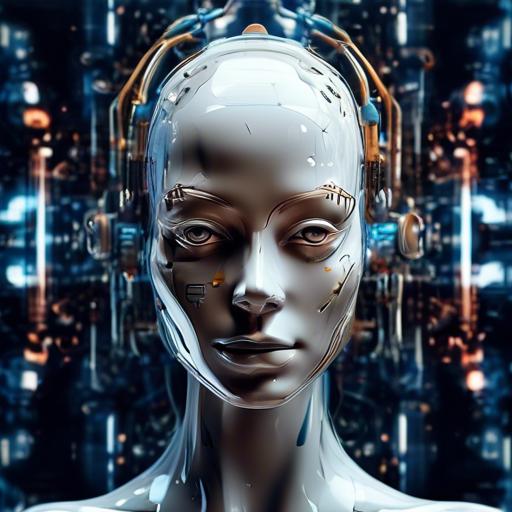
In the ever-evolving world of technology, the canvas of creation is expanding beyond traditional brushes and pencils, reaching into the realm of ones and zeros. Welcome to the fascinating journey of deep learning for image creation, a space where algorithms breathe life into digital artistry, conjuring visuals that were once the exclusive domain of human imagination. Whether you’re an aspiring digital Picasso or a tech enthusiast eager to delve into the confluence of creativity and computation, this introductory voyage promises to be as enlightening as it is inspiring. Together, let’s unlock the magic that happens when artificial intelligence meets art, embarking on a supportive exploration of how deep learning is revolutionizing the way we perceive and create images. Buckle up—this is where science fiction becomes splendid reality!
Deep Dive into the Origins: The Evolution of Deep Learning
Delving into the historical backdrop of deep learning reveals a fascinating evolution that has paved the way for modern image creation techniques. Deep learning, a subset of machine learning, wasn’t an overnight phenomenon. Its roots trace back to the early experiments with neural networks in the 1940s and 1950s, where pioneers like Warren McCulloch and Walter Pitts designed the first conceptual models of biological neurons.
The journey picked up momentum in the 1980s when the advent of backpropagation algorithms revolutionized the training of multi-layered neural networks. **Key figures** in this era, including Geoffrey Hinton, David Rumelhart, and Ronald J. Williams, empowered neural networks to adjust and learn through error correction:
**Geoffrey Hinton**: Renowned for his work on the backpropagation algorithm and deep belief networks.
**David Rumelhart**: Contributed significantly to understanding the applications of backpropagation in neural networks.
**Ronald J. Williams**: Known for his role in refining the algorithm and making it applicable to more complex datasets.
The **1990s and early 2000s** represented a period of stagnation due to computational limitations, which were soon overcome with the advent of powerful GPUs and large-scale datasets. This technological leap enabled deeper, more complex models, giving rise to breakthroughs such as convolutional neural networks (CNNs) developed by Yann LeCun. The groundbreaking success of AlexNet in the ImageNet Challenge in 2012 marked a pivotal point, showcasing the potential of deep learning in image recognition and generation.
Here’s a brief timeline of notable milestones in the evolution of deep learning:
Year
Milestone
1943
McCulloch and Pitts’ first neural model
1986
Introduction of backpropagation
1998
LeCun’s development of LeNet
2012
AlexNet wins ImageNet Challenge
From these origins, deep learning has burgeoned into an indispensable tool for image creation, allowing us to generate remarkably realistic visuals. As we continue to leverage these evolved techniques, we find ourselves ever more capable of creating stunning imagery that blurs the line between reality and art.
The Artistry of Algorithms: Neural Networks Unveiled
In the realm where art meets technology, neural networks emerge as the modern-day Michelangelos, chiseling images with mathematical precision and imaginative flair. These networked artists harness **layers of computational neurons** to recognize patterns, transforming raw data into mesmerizing visuals that captivate the eye and stir the soul. Whether generating surreal landscapes or hyper-realistic portraits, the underlying artistry lies in the intricate dance of algorithms meticulously orchestrating each pixel.
To appreciate this symphony of code, consider the journey of an image through a neural network. Initially, a humble collection of pixel values enters the network, akin to a blank canvas. As it progresses through various layers—each acting as a digital brushstroke—it begins to take form. These layers, with evocatively named functions like convolution and activation, **extract features** ranging from simple edges to complex textures, unravelling the visual tapestry within.
Marvel at the diversity of deep learning techniques, each contributing a unique brushstroke to the canvas of image creation:
Convolutional Neural Networks (CNNs): Masters of feature detection, these networks excel at identifying and replicating intricate details.
Generative Adversarial Networks (GANs): Duelists in creation, where one network generates images and another critiques them, fostering innovation through competition.
Style Transfer Algorithms: Alchemists of the digital world, blending styles of one image with the content of another to produce imaginative hybrids.
Below is a glimpse of different neural network architectures and their artistic applications:
Paintings with Van Gogh’s style, surrealist photography
Harnessing these neural networks requires not just technical understanding, but also an artist’s eye. Every tweak in the algorithm, much like every stroke of a brush, can shift the outcome dramatically. As you delve into deep learning for image creation, you will find it is not merely a field of science but a vibrant canvas awaiting your innovative touch.
From Pixels to Pictures: The Mechanics of Image Generation
Imagine being able to create stunning digital masterpieces with just a few clicks. That’s the incredible potential of deep learning in image generation. At its core, this technology hinges on intricate neural networks that learn from vast datasets of images, redefining the way we produce visual content. It’s not just a leap forward for digital artists, but a gateway for everyone to engage in the creative process.
Deep learning models like Generative Adversarial Networks (GANs) and Variational Autoencoders (VAEs) play pivotal roles in translating pixel data into coherent and often breathtaking images. **GANs**, in particular, function through a fascinating dance between two neural networks—the generator and the discriminator. While the generator crafts images, the discriminator evaluates them for authenticity, pushing both networks towards excellence via a continual feedback loop.
Beyond just models, the power of convolutional neural networks (CNNs) lies in their ability to mine intricate features from image data. By examining different levels of abstraction, CNNs can identify everything from basic edges to complex textures—each layer contributing to the final picture. **Pooling layers** help consolidate this information, reducing dimensionality while preserving critical features, thereby enhancing the network’s efficacy in image generation.
However, the magic doesn’t stop with sophisticated algorithms alone. One of the most intriguing aspects is the fusion of human creativity with machine precision. Tools that leverage deep learning enable users to bring their visions to life, whether through AI-assisted design interfaces or by offering new methods of visual storytelling. The intersection of human intuition and artificial intelligence is where true innovation blossoms, propelling image creation into uncharted territories.
As we delve deeper into the mechanics of this technology, it’s clear that we’re just scratching the surface. The potential for personalization, rapid prototyping, and even autonomous creative processes is immense, making deep learning an indispensable tool for the modern artist and technologist alike.
Tools of the Trade: Essential Libraries and Frameworks
Diving into deep learning for image creation requires a robust toolkit. Here are some libraries and frameworks that can significantly enhance your workflow and outcomes:
TensorFlow: Developed by Google, TensorFlow is a versatile open-source library ideal for deploying deep learning algorithms. Its rich ecosystem provides extensive support for training and deploying complex neural networks.
PyTorch: Known for its dynamic computational graph, PyTorch, developed by Facebook, excels at rapid prototyping and research. Its user-friendly interface makes it a favorite among developers and researchers alike.
Keras: A high-level API built on top of TensorFlow, Keras simplifies neural network creation with concise and readable code. It’s perfect for beginners venturing into the deep learning domain.
OpenCV: This open-source computer vision library is essential for image processing tasks. OpenCV facilitates simple manipulations, transformations, and optimizations of images before feeding them into neural networks.
The following table provides a quick comparison of these popular libraries and frameworks:
Library/Framework
Key Features
Usage Level
TensorFlow
Extensive support, large community, versatile
Advanced
PyTorch
Dynamic computation, easy debugging
Intermediate
Keras
Simple APIs, rapid prototyping, built on TensorFlow
Besides these core libraries, it’s worth exploring additional tools that complement image creation:
GANs (Generative Adversarial Networks): These architectures are pivotal in generating realistic images. Libraries like PyTorch-GAN offer out-of-the-box implementations of GANs, fostering creativity in image synthesis.
StyleGAN: Developed by NVIDIA, this neural network specializes in high-quality image generation. The library provides pre-trained models, making it easier to create intricate and seamless images.
DALL-E: OpenAI’s transformer-based model generates images from textual descriptions, pushing the boundaries of creativity and utility.
Crafting Creativity: Techniques for Training Effective Models
Unleashing creativity through deep learning is a revolutionary approach that has garnered immense popularity. Creating effective models for image creation requires not only a deep understanding of neural networks but also a flair for innovation. Below, we delve into some tried-and-tested techniques that can help you train models that stand out.
Data Augmentation
Augmenting your data can significantly enhance the capability of your models. By applying transformations like rotation, translation, and scaling, you can increase the diversity of your dataset without actually collecting more data. Here’s a brief overview of augmentation techniques:
Rotation: Turning images by a certain degree to generate new perspectives.
Translation: Shifting images across the canvas to mimic different viewpoints.
Scaling: Enlarging or shrinking images to introduce varied resolutions.
Flipping: Flipping images horizontally or vertically to create mirrored versions.
Adjusting Hyperparameters
Hyperparameters play a crucial role in training effective models. Adjustments to learning rate, batch size, and number of epochs can influence the model’s performance. Here’s a handy reference for managing these settings:
Hyperparameter
Purpose
Learning Rate
Controls how much to change the model in response to the estimated error each time the model weights are updated.
Batch Size
Determines the number of samples that will be propagated through the network.
Epochs
Number of complete passes through the dataset during the training process.
Transfer learning is a technique where you take a pre-trained model and fine-tune it for a different but related task. This approach can speed up the training process and often yields better results since the pre-trained model has already learned useful features from a large dataset. Popular models like VGG, ResNet, and Inception can give your project a significant head start.
Cross-Validation
Implementing cross-validation ensures that your model generalizes well to unseen data. By dividing your data into multiple subsets and training on different combinations, you can validate your model’s performance more robustly. Techniques like k-fold and stratified cross-validation are particularly useful.
Beyond the Basics: Advanced Strategies for Image Enhancement
Moving into advanced techniques for enhancing images, leveraging deep learning becomes an indispensable tool. One cornerstone of these strategies is the utilization of Convolutional Neural Networks (CNNs), renowned for their ability to discern intricate patterns and details within images. CNNs excel in tasks such as noise reduction, super-resolution, and even colorization of grayscale images.
Generative Adversarial Networks (GANs)
Autoencoders
Transfer Learning
Generative Adversarial Networks involve a dueling battle between two neural networks: the generator and the discriminator. The generator aims to create realistic images, while the discriminator works to distinguish between real and generated images. This dance of competition yields highly refined and ultra-realistic image enhancements.
Autoencoders, on the other hand, are designed for the purpose of learning efficient codings of data. Unlike traditional methods, autoencoders can compress and decompress images, which makes them a brilliant choice for tasks like image denoising, reducing artifacts, and even reconstructing images from sparse data.
Transfer Learning is a strategic approach where pre-trained models on extensive datasets are repurposed for new but similar tasks. This method not only drastically reduces the time required for model training but also enhances the quality of image output due to the pre-learned rich feature extractions.
Technique
Best For
CNNs
Pattern Recognition
GANs
Realistic Image Synthesis
Autoencoders
Image Denoising
Transfer Learning
Pre-trained Model Efficiency
By harnessing these sophisticated deep learning strategies, your toolkit for image enhancement becomes not only more versatile but also significantly more powerful. Whether it’s clarifying an old photograph, generating entirely new content, or sharpening minute details, these methods provide a comprehensive pathway to achieving stunning visual results.
Harnessing Hardware: Optimizing Performance with GPUs and TPUs
Deep learning has revolutionized the way we create and process images, and the potential of **GPUs (Graphics Processing Units)** and **TPUs (Tensor Processing Units)** in optimizing performance is nothing short of phenomenal. Leveraging these hardware advancements enables faster training times and more efficient model execution, crucial when dealing with complex image creation tasks.
GPUs, originally designed for rendering graphics, are perfect for deep learning. They can handle multiple operations in parallel, which is essential when training models on vast datasets. On the other hand, TPUs, developed by Google, are specifically tailored for tensor computations, making them incredibly powerful for running deep learning models. Both hardware options ensure that your deep learning workflows are not bottlenecked by computational limitations.
Here are some key advantages of using GPUs and TPUs:
Parallel Processing: Both GPUs and TPUs excel at handling numerous operations simultaneously, which significantly speeds up training times.
High Throughput: The ability to process large matrices rapidly makes them ideal for image creation tasks where large-scale computations are involved.
Scalability: Modern frameworks like TensorFlow and PyTorch are optimized to work seamlessly with these hardware accelerators, making it easy to scale tasks across multiple units.
Aspect
GPUs
TPUs
Designed For
Graphics rendering originally, now widely used in deep learning
When selecting between GPUs and TPUs, consider the nature of your deep learning project. For variable tasks and wider compatibility with different frameworks, GPUs are highly versatile. However, for projects entrenched in TensorFlow, TPUs provide unparalleled performance. Ultimately, balancing your needs with the strengths of each hardware option will lead to optimal performance in your image creation endeavors.
Ethics in Pixels: Navigating the Moral Landscape of Deep Learning
The rapid advancement of deep learning technologies has introduced exciting possibilities in the realm of image creation. This innovative field has not only redefined creative boundaries but also sparked essential conversations about the ethical implications involved. Understanding these moral aspects ensures that we navigate this digital landscape responsibly.
From generating hyper-realistic portraits to enhancing historical photographs, deep learning models like Generative Adversarial Networks (GANs) and Variational Autoencoders (VAEs) have demonstrated breathtaking capabilities. However, this power brings with it a significant ethical responsibility. Misuse of these technologies can lead to misinformation, invasion of privacy, and even identity theft.
Misinformation: Deep learning can create images so realistic that distinguishing them from real photos becomes challenging.
Privacy Concerns: Unauthorized use of individuals’ likenesses in generated images must be vigilantly monitored.
Intellectual Property: Respecting original creators’ rights and avoiding derivative works without proper acknowledgment is imperative.
Consider the balance between creative exploration and ethical integrity. By integrating ethical guidelines into our workflows, we can foster an environment where technology is used to uplift and inspire, without compromising moral standards. Below is an overview of the potential benefits and risks associated with deep learning in image creation:
As we continue to advance in this thrilling arena, maintaining a vigilant focus on ethical practices will ensure that deep learning serves as a tool for good, amplifying human creativity and protecting societal values.
Real-World Applications: Success Stories and Future Horizons
The fascinating intersection of deep learning and image creation has already paved the way for a multitude of successful applications. **Artists and designers** are now using these advanced algorithms to generate unique pieces of art, pushing the boundaries of creativity. Companies like OpenAI with DALL-E and NVIDIA with their AI-based art creation platforms highlight how deep learning models can produce visually stunning and highly detailed images that were previously unimaginable.
Across industries, deep learning has found innovative uses. **In fashion and e-commerce**, deep learning models generate clothing designs and visualize outfits on virtual models, streamlining prototyping and marketing processes. **Healthcare** benefits profoundly from AI-generated images in medical imaging to enhance the precision and speed of diagnoses through methods like CT scans and MRIs visualized by AI.
Industry
Application
Art & Design
Generating unique art pieces
Fashion & E-commerce
Visualizing clothing designs
Healthcare
Enhancing medical imaging diagnostics
The potential of deep learning in enhancing **virtual reality (VR) and augmented reality (AR)** experiences is particularly exciting. Leveraging AI-generated imagery, developers are creating more immersive and interactive environments that respond in real-time to user actions. This advancement is pivotal for gaming, training simulations, and virtual tours, providing a richer user experience.
Looking ahead, the horizon for deep learning applications in image creation is vast and filled with possibilities. **Ethical AI** in developing fair and unbiased image generation algorithms remains a crucial focus, ensuring technology is used responsibly. Collaborative artists and AI systems might soon co-create artworks, merging human creativity with machine precision. The integration of deep learning in **JPEG and other image compression techniques** can lead to efficient storage solutions, revolutionizing how we handle massive image datasets.
The success stories provide only a glimpse into what’s achievable with deep learning in image creation. As algorithms become more sophisticated and accessible, the future promises even more innovative and diverse applications across various domains. The blend of creativity and technology continues to unfold, unlocking new dimensions in the way we create, perceive, and utilize visual content.
Key Takeaways
As we conclude our journey into the fascinating world of deep learning for image creation, I hope you have found inspiration and newfound appreciation for the limitless possibilities this technology holds. Remember, art knows no boundaries, and with the power of deep learning, you too can unlock your creative potential and bring your wildest imaginations to life. So go forth, experiment, and let your creativity soar. The canvas is your mind, and the tools are at your fingertips. Embrace the magic of deep learning and watch as your visions become reality. Keep creating, keep dreaming, and never stop exploring the endless horizon of possibilities that deep learning has to offer. The journey is just beginning, and the future is bright. Create on, my friends. Create on.